Supply Chain talent is increasingly difficult to acquire
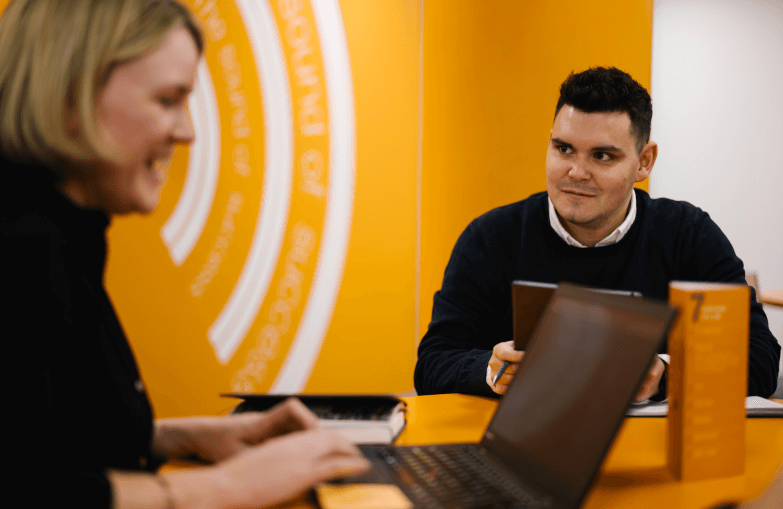
As a specialist recruitment consultancy, we deliver the supply chain talent your business needs to thrive.
We go the extra mile recruiting Procurement, Buying, Supply Chain, Logistics, Sales & HR professionals, combining tech systems, data automation, analytics as well as our expertise to secure Supply Chain professionals for your business.
We're passionate about our recruitment solutions and have been going the extra mile for our clients and candidates since 2005.
Candidates we're working with…
Our clients trust us with their talent










Think finding the right talent is complicated? That’s why we’ve made our recruitment Solutions simple.





See what our clients have to say…
I have found that the level of service and professionalism is exceptional. For me, one of the most important aspects of any relationship is ongoing communication and ensuring that I am kept up to speed with a process and how this is progressing and this is certainly an element of the service provided that I feel is a strength of Cast.
Karen Owen
HR Business Partner at JD Sports

Cast UK recently completed a large recruitment assignment on our behalf, recruiting all required employees at every level from Operations Manager through to drivers for a newly constructed site in Harlow. They fulfilled all of the project’s requirements within a very tight timescale to a very high standard.
Their knowledge of our business & culture alongside their sector specialist expertise make it a pleasure to work with Cast UK
Stuart Fairbairn
Head of HR, Bunzl Catering Services
Cast UK take real time to get to know us as a business and really get under the skin of what the role is, what we’re looking for, the culture fit of the business and make sure that they are really trying to find us the absolute best people. We can always rely on Cast to give us some advice in terms of who’s on the market at the moment and what they are looking for from us as an employer
We’ve got a really great relationship with Cast UK and one that we hope will flourish over the years.
Clare Archibald
HR Manager at Ella's Kitchen

Abbey recognises that the increased demand for excellent logistics candidates in the UK means we need to work hard to attract the best talent in the industry to maintain a top level of service for our Blue Chip clientele. We are confident that Cast UK can provide us with candidates that have the right knowledge and experience to allow us to continue our expansion going forward.
Steve Granite
Managing Director at Abbey Logistics Group

Cast UK spent considerable time making sure they understood our business and the role thoroughly, touring our warehouse and investigating exactly what was required. They worked in partnership with us to ensure that our business and culture were matched incredibly well with the best candidates, we were very impressed.
Cast UK’s depth of knowledge regarding our sector and the role’s requirements were second to none.
Chris Illingworth
Finance & Operations Director at Widdop, Bingham & Co ltd.

We have been working with Cast UK for 6 months, using Cast Talent. I have been telling everyone I meet/work with how pleased we are with the services that Cast UK provide. I would like to compliment Cast UK on both the service packages on offer and specifically the on the quality of the team they employ.
I am one very satisfied customer.
Fiona Strong
Managing Director

I was initially skeptical about Cast UK's video interviewing service, but since using it I absolutely love it. We were able to learn so much more about a candidate through video interviewing than we would by just looking at their CV.
Cast UK took care of all first-stage interviews, meaning we didn't have to take hours out of our working day. This meant the whole process was significantly faster, Cast managed to turn the job around and hire someone much quicker than we thought possible.
I would definitely go to Cast UK as a recruitment partner for any future requirements we have.
Gary McEwan
Managing Director


Join our team
Our people are at the centre of our growth and we take finding talent seriously. If you’re looking for a career with a business that is committed to training and developing its people and you want to be a part of a team of ambitious people, then why not get in touch?